

KA220 ADU Adult education and sustainable practices: Sun's light and heat as renewable energy sources
Project Reference: 2022-1-IT02-KA220-ADU-000087707
Objectives
Solar energy is an essential source of renewable energy, supported by technologies that capture, distribute, or convert sunlight into usable power.
The SOLAR project – Adult Education and Sustainable Practices: Sun's Light and Heat as Renewable Energy Sources* – aimed to develop training and educational content and tools in the field of adult education. Its purpose was to raise citizens' awareness of the opportunities offered by solar energy and encourage its adoption as an environmentally friendly energy source.
Activities
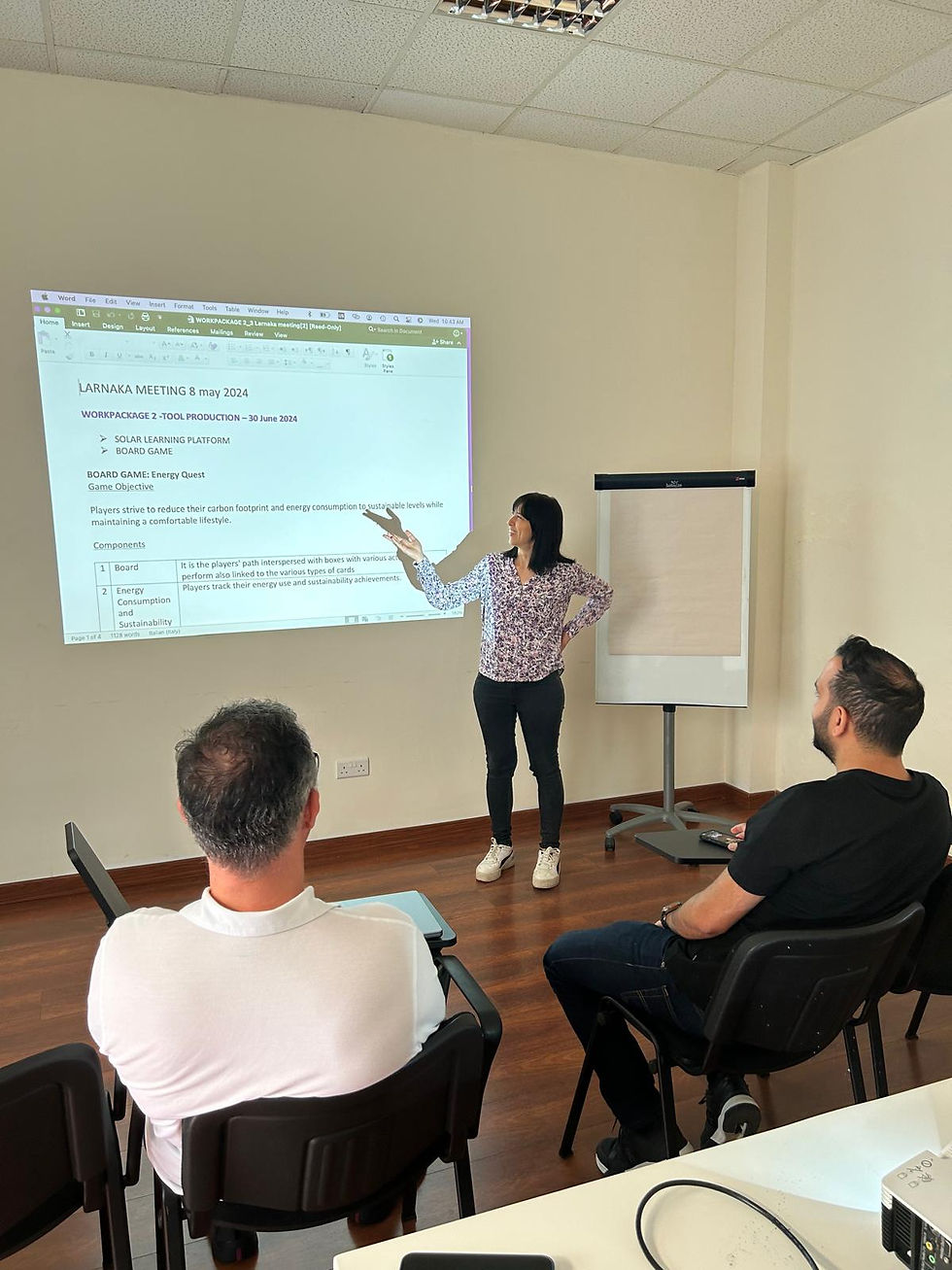
To achieve its objectives, the SOLAR project carried out both production and training activities. Production activities focused on developing educational resources, including the SOLAR Training Toolkit and Web Resource Centre for educators, as well as an e-learning course and a board game for adult learners. Training activities included a Training of Trainers programme and Pilot Educational Courses for adults, which took place in the three participating countries: Italy, Spain, and Cyprus.
Impact
The SOLAR project was designed to generate outcomes at three levels:- **Process:** The project brought together experts from partner organisations and target groups, creating a transnational training and learning community focused on solar energy.-
Product:
The project developed training and educational tools intended to increase awareness of sustainable approaches to energy production and consumption.
mpact:
The project aimed to involve approximately 350 people across three European countries in training and educational activities, promoting greater awareness of renewable energy and sustainable practices.

ACTIVITIESThe participants have been engaged in activities based on collaboration and mutual help, as a way of enhancing all the skills and competences resilience consist in. The classroom became an inclusive environment in which everyone was invited to participate and share his feelings and experiences. PARTICIPANTSThe project engaged all the adolescent students of the partners schools. Special attention has been given to vulnerable individuals, for example the ones who are experiencing economic hardship or that have behavioural, emotional, family or socialisation problems, the ones that are facing more serious challenges like family breakdown, family illness or death, or bullying, as well as the ones that have learning difficulties or disabilities, or simply more anxious personalities.METHODOLOGYThe methodology was based on the use of music to promote activities aimed at developing resilience. In particular it was used some approaches and strategies like:- cooperative learning- classroom discussion- brainstorming activities- use of technology to promote transcultural and transnational communication.IMPACT AND LONG TERM BENEFITThe project had an impact on the education system, as it enabled schools to participate in Erasmus+ projects that otherwise would not have had the opportunity.
Photogallery



Consortium


